
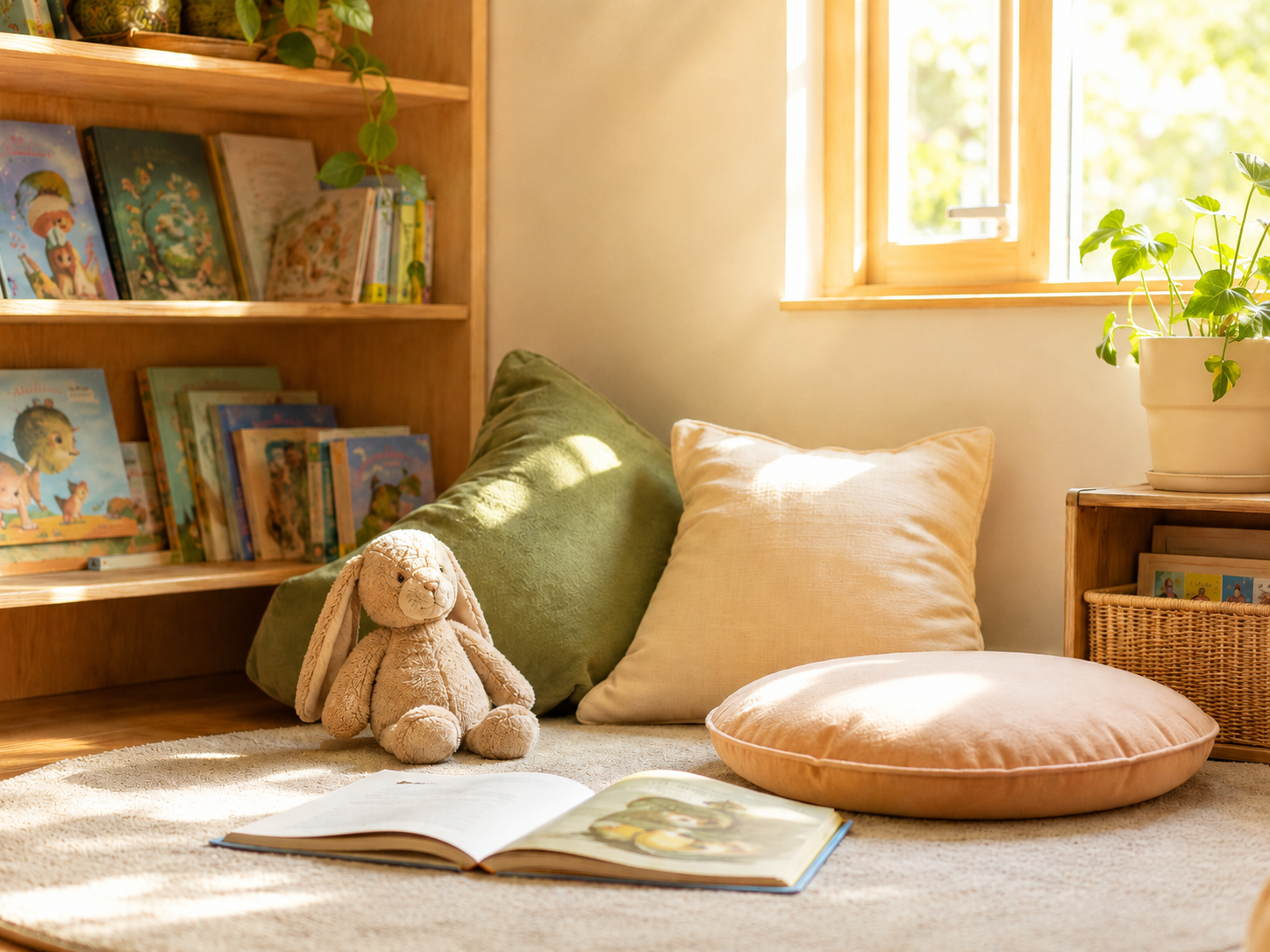
At nursery, some objects matter more than adults may realise. A comfort blanket, a soft toy or a small piece of fabric may seem simple. For a young child, it can mean a great deal.
At Les Petits Tournesols, we know that a comfort object can help some children experience the transition between home and nursery more calmly. It reassures, supports, sometimes comforts, and gives the child a familiar reference point in a different environment.
A link between home and nursery
A comfort object is not just an object. For many children, it carries something from home: a smell, a texture, a habit, a familiar presence. It can help the child connect their family world with life in a group setting.
Paediatrician and psychoanalyst Donald Winnicott introduced the concept of the transitional object to describe the objects young children become attached to and that support their emotional development. This does not mean that every child needs one, but for some children, it can play an important role during separation or change.
Key points
- A comfort object can help a child feel reassured.
- It can make the transition between home and nursery easier.
- It may support sensitive moments: arrival, tiredness, sadness or nap time.
- Every child has their own rhythm: some need one, others do not.
When can a comfort object help?
Morning arrival is often an important moment. Even when a child knows the nursery well, separating from a parent can still take time. Having a comfort object nearby can help the child go through this transition more peacefully.
It can also be present at nap time, during tired moments, after a small sadness or on days when the child seems to need more reassurance. It never replaces the adult’s presence, but it can support the child while they gradually find their balance again.
At nursery, the aim is not to remove this reference point too quickly. The team observes the child, their needs at that moment and their ability to let go of it gradually when they feel ready.
Not every child has the same need
Some children arrive each morning holding their comfort object tightly. Others put it away quickly. Some ask for it only to sleep. Others do not have one at all.
These differences are normal. A comfort object is neither an obligation nor a problem. It is one of the many small reference points that can help a child feel secure.
What matters is respecting each child’s rhythm. Forcing a child to leave it too early can create unnecessary tension. Supporting them gently towards more autonomy often allows a natural transition, without pressure.
The role of the nursery team
The role of the professionals is to observe, support and provide security. A child who keeps their comfort object all morning does not necessarily need it to be taken away immediately. They may simply need time to enter into the day.
Little by little, the child can be encouraged to place it in a known place: their locker, their bed, a personal box or a space identified by the team. What matters is that this gesture makes sense to the child.
As the child gains confidence, they can take part more fully in play, activities and group life, while knowing that their comfort object remains available if needed.
A practical point
A comfort object should remain reassuring, but it must also fit into group life: hygiene, safety, the child’s name on the object and the organisation of the nursery.
Simple advice for parents
To avoid everyday difficulties, it is useful to label the comfort object with the child’s name. If possible, having a spare one can also help, especially when the object is important for sleep or separation.
It is better not to wash the comfort object just before a major change, such as a first day at nursery. Its familiar smell may be part of what reassures the child.
Parents can also explain the child’s habits to the team: when they ask for it, whether they need it to sleep, whether they keep it close during separation or whether they can easily put it down.
A small object, a strong sense of security
A comfort object does not make a child less independent. On the contrary, when it is respected and well supported, it can help the child move towards greater inner security.
At nursery, growing does not mean doing everything alone immediately. Growing also means being able to rely on familiar reference points in order to discover a new environment, build relationships with adults, play with other children and gain confidence.
At Les Petits Tournesols, we pay attention to these small everyday details, because they often say a lot about a child’s needs.
For any question, you can contact us.