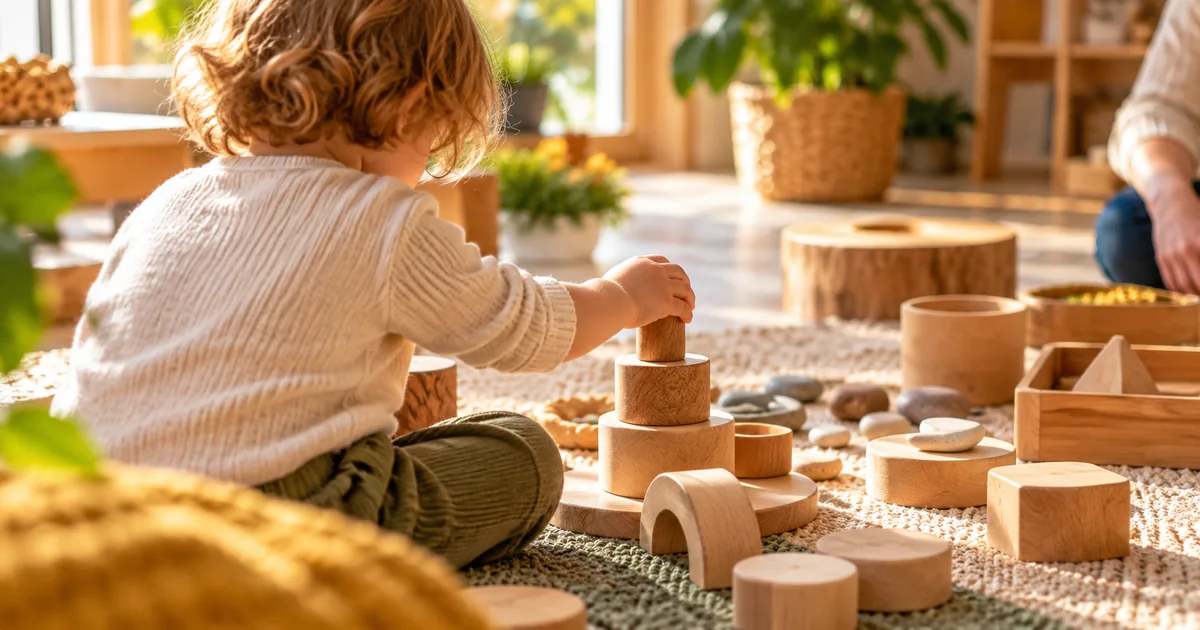



Short answer: at nursery, nap time is a period of rest offered in a calm environment. The team observes each child and talks with their family to support their needs without promising that they will sleep.
At Les Petits Tournesols, rest is an important part of the day. The aim is to provide reassuring reference points while respecting each child's individual rhythm.
How does nap time work at nursery?
Sleep needs change with age and may also vary from one day to the next. Some children fall asleep, while others mainly need a quiet moment. Support therefore relies on observation, the adult's availability and information shared with parents.
There is no promise that a child will sleep and no identical duration imposed on everyone. A more active day, a different night or a settling-in period may temporarily change the need for rest.
Gentle and reassuring reference points
A peaceful setting, predictable gestures and, when suitable for the child, a familiar object can make the transition to rest easier. The team's role is to provide support without pressure and to remain attentive to signs of tiredness or discomfort.
Parents can share useful habits, recent changes or difficulties noticed at home. This dialogue helps maintain continuity between family and nursery without necessarily reproducing every home routine in exactly the same way.
How much sleep does a preschool child need?
The American Academy of Sleep Medicine and the National Sleep Foundation state that children aged 3 to 5 generally need 10 to 13 hours of sleep per 24 hours, including naps. This is a general reference, not a target to impose during the nursery day alone.
A systematic review of children aged 24 to 72 months found overall associations between better sleep quantity or quality and some cognitive or behavioural outcomes. The authors nevertheless note that the observed effects were modest and that the studies do not support simple conclusions for every child.
Preparing your child's nursery experience
Discover our nurseries in Kayl, Itzig and Brouch. You can also check available places or contact our team with your questions.
Sources
- American Academy of Sleep Medicine consensus recommendations for children's sleep duration.
- National Sleep Foundation sleep duration recommendations.
- Reynaud et al., systematic review of sleep, cognition and behaviour in preschool children.
Frequently asked questions
Does every child have to sleep at nursery?
No. Needs differ from one child and one day to another. Nap time first provides a calm period of rest, without guaranteeing that every child will fall asleep.
Is nap duration the same for every child?
No. The need for rest varies with age, night-time sleep and tiredness. The team observes each child and talks with their family.
Can my child keep a familiar object while resting?
A familiar object can sometimes reassure a child when its use is compatible with nursery safety rules and organisation.
What should I tell the team about my child's sleep?
You can share useful routines, an unusual night, a period of tiredness or any recent change that may affect the need for rest.