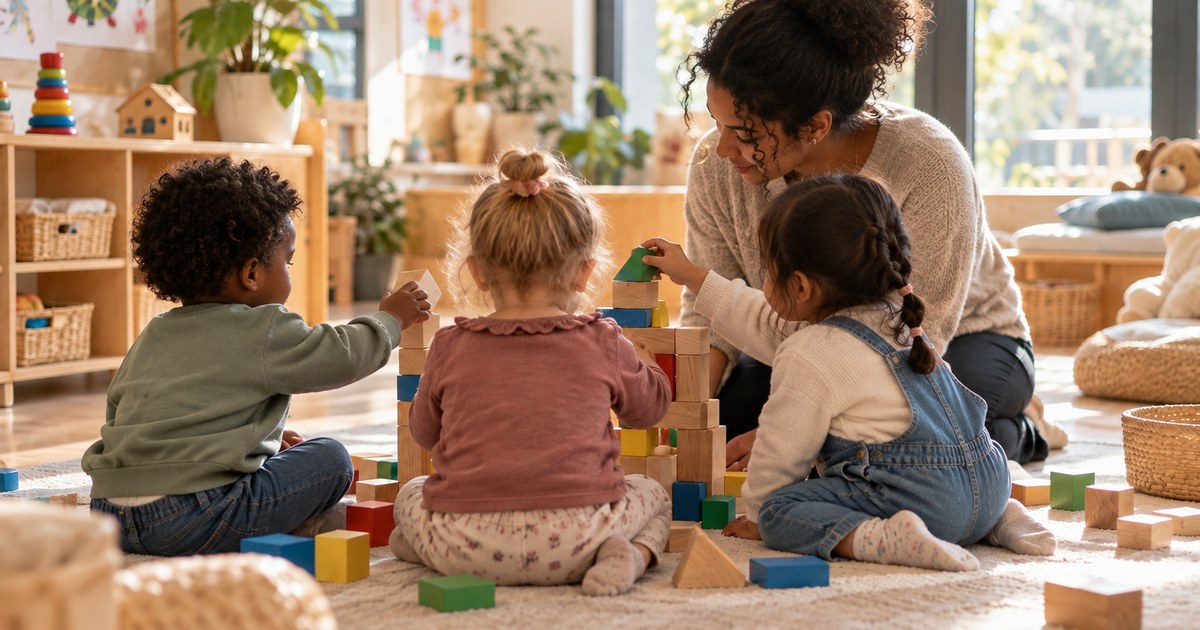



Going back to daycare is not always a first adaptation. For children who already know the rooms, the team and the rhythm of the day, it is more often a return after a break: holidays, family time, a change of rhythm or a longer absence.
Even when a child knows the daycare, returning can take a little time. The familiar landmarks are there, but they may need to settle again gradually: morning arrival, playtime, meals, nap time, seeing the other children again and separating from parents.
At Les Petits Tournesols, we support this period with calm, observation and dialogue with families. Every child is unique. Some children find their habits again very quickly; others need a few days to regain confidence in the group rhythm.
Going back is not always a first adaptation
An initial adaptation usually means entering a new place, meeting new adults, building new landmarks and experiencing a separation that is still unfamiliar. Going back to daycare often concerns a child returning to an environment they already know.
After a break, however, even a familiar place may require a little time. The child may have experienced different schedules, more family time or less regular days. Returning to daycare means finding a shared daily rhythm again, with its moments, simple rules and transitions.
After a break, familiar landmarks return gradually
For young children, landmarks are built through repetition. The same morning welcome, the same gestures, familiar adults and recurring moments of the day help them regain a sense of security.
Some children quickly return to their habits. Others observe more, ask for more closeness, want their comfort object nearby, stay close to an adult or begin by playing more quietly.
The role of routines
Morning arrival, moving into play, meals, nap time, care moments, activities and reunion with parents create continuity. These repeated moments help the child understand what will happen next and feel ready to play, explore and connect with others.
Emotions may be stronger in the first days
It is common for the first days back to feel more emotionally intense. Some children may cry at separation, be more tired in the evening, ask for more closeness or need extra reassurance.
These reactions do not necessarily mean that the return is going badly. They may simply express the effort involved in the transition.
How parents can prepare the return
A few days beforehand, it may help to gradually return to more regular times: bedtime, waking up, meals and quiet moments.
In the morning, a clear and caring goodbye is often more reassuring than an uncertain departure that stretches on. This does not mean leaving abruptly. It means saying goodbye calmly, explaining that you will come back and allowing the team to take over.
What the team observes at daycare
When children return, the team does not only observe whether a child cries or not. They observe the whole day: how the child enters play, eats, rests, seeks adult support, interacts with other children and finds habits again.
A successful return is a supported return
A successful return is not measured by a complete absence of tears. It is measured by the quality of support: a child welcomed calmly, informed parents, an attentive team and familiar landmarks gradually returning.
There is no universal timeline. What matters is that the child feels the adults around them are consistent, available and reassuring.
Sources
- Les Petits Tournesols, educational project
- SNJ / MENJE, national reference framework for non-formal education
- SNJ, quality tools: SEA self-assessment
Talk with our team
Would you like to learn more about your child’s return or visit one of our nurseries? Contact us.
Frequently asked questions
Is it normal for my child to cry again even though they already know daycare?
Yes. After a break or holidays, some children need a few days to find their familiar landmarks again.
How long does it take to find the rhythm again?
It depends on each child. There is no universal timeline.
How can we prepare the return at home?
It may help to return gradually to regular times, talk about daycare with simple words and prepare belongings together.
Should I stay for a long time in the morning if my child cries?
Not necessarily. A clear, gentle and caring goodbye is often more reassuring than an uncertain departure that stretches on.
What is the difference between returning and adaptation?
Initial adaptation means entering a new place. Returning means coming back to a familiar place after a break.