
It is time to collect your child from nursery. You pick up their coat, favourite comforter and belongings, then ask a perfectly natural question: “What did they do today?”
Perhaps there is a painting to admire or a small craft to put on the fridge. But sometimes there is nothing to take home: no drawing, no finished project. Just a day spent playing, watching, trying and trying again.
What if some of the day's most meaningful discoveries happened in moments that left nothing to show?
A young child's most important work is not always visible
We live in a world that values measurable achievements. Without realising it, we can apply the same expectations to early childhood: a finished craft looks like proof of a productive day, while open-ended play may seem less important.
Yet young children explore through their senses, movements and relationships. They touch, move, listen and observe. They find out what happens when they act and how the people around them respond.
The American Academy of Pediatrics explains that age-appropriate play supports social, emotional, cognitive and language development. Play is not simply what children do before learning begins. Play is one of the ways they learn.
Again and again: why repetition matters
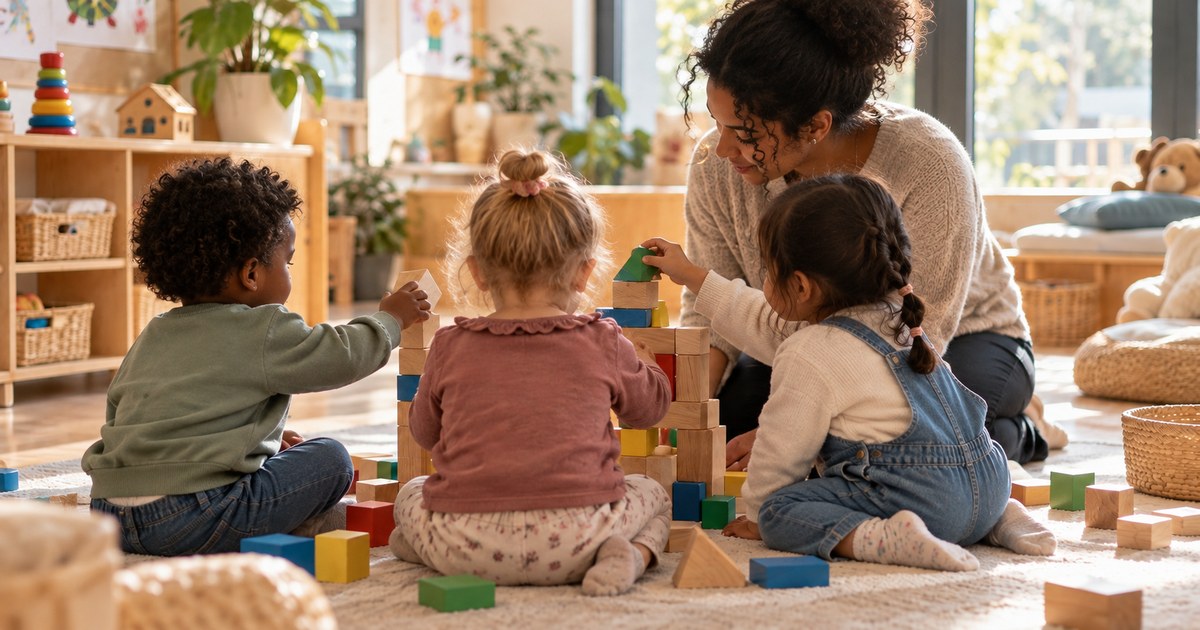
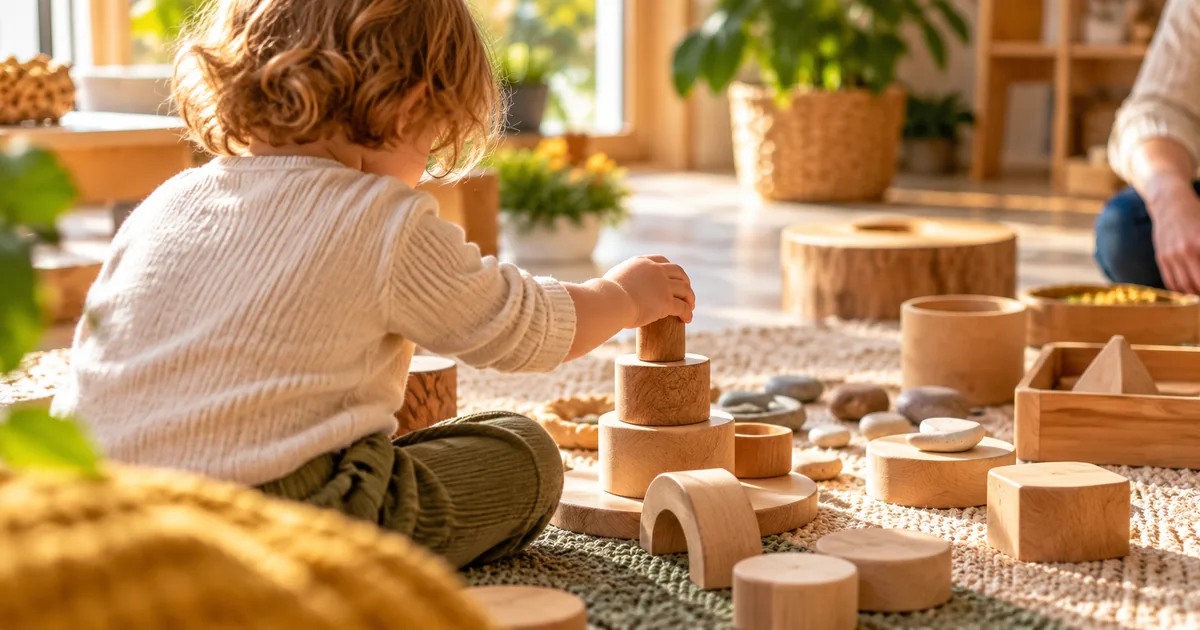
A child may build a small tower and knock it down over and over. Adults already know what happens next. For the child, each attempt can help refine a movement, anticipate an outcome or develop confidence.
Luxembourg's national framework for non-formal education recognises the value of repeated experiences and play. Constantly suggesting something new is not necessarily what a child needs.
Giving children time does not mean leaving them without support. Educators remain close enough to encourage, keep them safe and step in when needed. Respecting a discovery also means respecting the time it takes.
Watching is a way of taking part, too
In a group, some children head straight into an activity; others prefer to watch first. Observation can help a child become familiar with an experience before joining in.
Not every quiet moment automatically means learning, and prolonged withdrawal should never be ignored. The educator tries to understand what the child is experiencing: curiosity, tiredness, uncertainty or perhaps a wish to join in with some help.
At Les Petits Tournesols, our educational project values observation and each child's individual pace. The aim is not to make everyone participate in the same way, but to offer opportunities that feel right for them.
Free play gives children room to take the lead
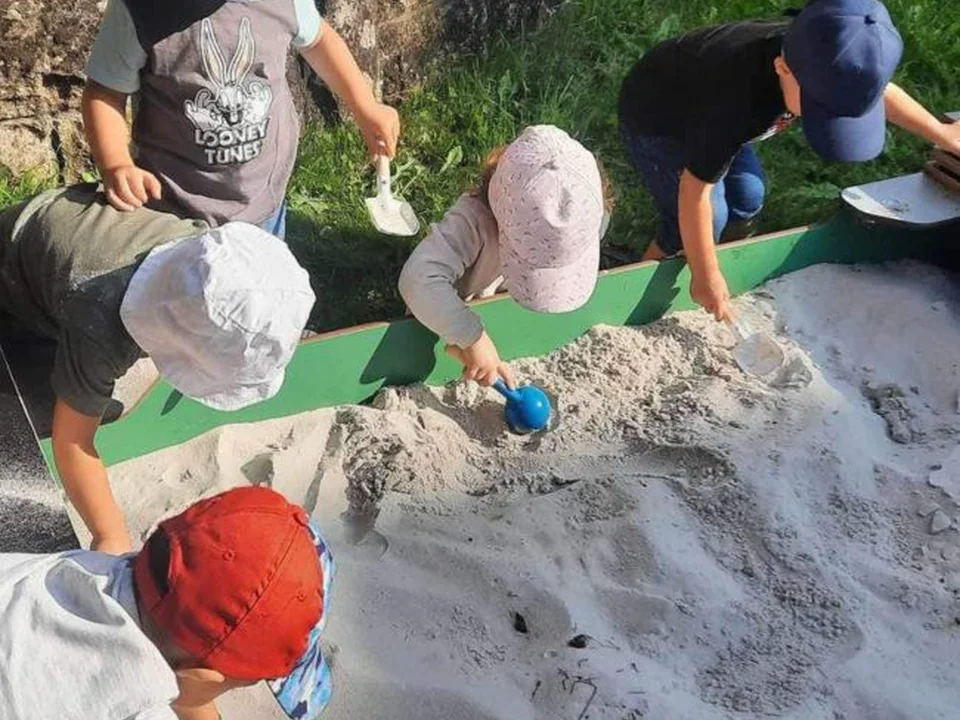
During free play, children can choose what interests them and how to explore it within a safe environment. They may invent a story, experiment with a material, play alone or seek out other children.
UNICEF highlights how these experiences can encourage independence, imagination and problem-solving. But free play never means a lack of adult attention. The environment needs to suit the children's age, with appropriate materials and attentive professionals.
Freedom to explore works best within a thoughtful, reassuring framework.
The work of educators that parents rarely see
When we picture an educator at work, we often imagine the activities they organise. Much of their work is quieter: noticing a need, welcoming an emotion, supporting a disagreement, encouraging an initiative or waiting before stepping in.
The OECD's Starting Strong VI report emphasises the quality of everyday interactions with children, adults and their environment. Harvard's Center on the Developing Child also describes how responsive back-and-forth exchanges support early development.
A look answered with a smile, a song shared together or a child reassured in a difficult moment: these are meaningful parts of professional care, even when nothing tangible is produced.
Planned activities matter. So does breathing space.
Does this mean giving up music, creative activities, movement or sensory play? Not at all. These experiences have an important place in nursery life, alongside free play and everyday routines.
A painting can matter even if the finished picture is different from the original idea. A musical moment does not need to end with a perfectly learned song. What matters is the child's experience, enjoyment and chance to experiment.
A good nursery day is not necessarily the busiest one. It is one that offers experiences suited to the child.
Everyday moments are meaningful as well
Mealtimes, getting dressed, moving between activities and resting are part of a nursery day. They can offer chances to communicate, become more independent or recognise familiar routines.
But not every moment has to become a lesson. A meal can simply be enjoyable and a quiet pause can simply be restful. Children deserve time to play for the pleasure of playing.
At home, it is sometimes fine to do less
Parents naturally want to offer stimulating experiences. Yet children's development does not depend on having an endless programme of new games.
At home, we can give children time to choose, allow repetition and take an interest in what catches their attention. UNICEF recommends a safe space, responsive adults and opportunities for children to attempt solutions before adults take over.
Free play is not a requirement to play alone: shared play is just as valuable when a child seeks it.
Perhaps we could ask a different question
At pick-up time, instead of asking only what your child made or did, we can also wonder what they experienced. What interested them? Was there a moment they enjoyed? Did they try something new?
Educators cannot describe every minute, but conversations with families can help make these small experiences visible and reveal how a child is growing.
What your child really brings home
Sometimes the nursery bag contains a drawing. Sometimes it contains only the usual belongings. The child's experience is much bigger than what fits inside.
Perhaps they became more confident with a movement, invented something or simply enjoyed feeling safe. Not every minute must deliver a measurable learning outcome.
At Les Petits Tournesols, we aim to provide time, familiar routines, responsive relationships and varied opportunities to explore. The most important thing your child discovered today may not be visible just yet.
Sources
- Luxembourg – Cadre de référence national sur l’éducation non formelle
- American Academy of Pediatrics – The Power of Play (2018, réaffirmé en 2025)
- UNICEF – What is free play and why should you encourage it at home?
- OCDE – Starting Strong VI (2021)
- Harvard Center on the Developing Child – Serve and Return
Talk with our team
Would you like to know more or discover one of our nurseries? Contact us.
Frequently asked questions
What is free play in nursery?
Free play gives children space to choose and explore within a safe, age-appropriate environment, while educators remain available to support them.
Do children really learn through play?
Yes. Play can support language, movement, relationships, creativity and problem-solving, depending on the experiences and support available.
Should I worry if my child often plays alone?
Playing alone can be part of typical development. If the pattern concerns you or continues alongside other difficulties, speak with the professionals caring for your child.
Is free play better than planned activities?
Neither is universally better. Both can complement each other when suited to children's ages, needs and interests.