

The length of the nursery settling-in period varies with each child: there is no universal timetable. In practice, it generally lasts between one and three weeks, with visits gradually extended in the presence of a parent before progressing to drop-offs. Crying, clinginess and heightened vigilance are normal, expected reactions. The goal is not speed, but a lasting sense of security.
The question comes up often: how much time should we allow? There is no universal answer. Some toddlers find their footing quickly. Others need more time and gentleness. What matters most is not speed, but the quality of this transition into group life — and that is precisely what the teams at Les Petits Tournesols strive to honour every day.
1. There is no fixed timeline that works for every child
Every child is unique. Their age, temperament, home habits, sensitivity to separation and even how they are feeling on a given day can all naturally shape this period.
At Les Petits Tournesols, we know that a successful settling-in is not necessarily the shortest one. Above all, it is the one that allows the little one to gradually feel secure in their new environment, while also giving parents the space to enter this new chapter with confidence. This belief shapes how we welcome every family, whether at Kayl, Itzig or Brouch.
2. Settling in often happens in stages
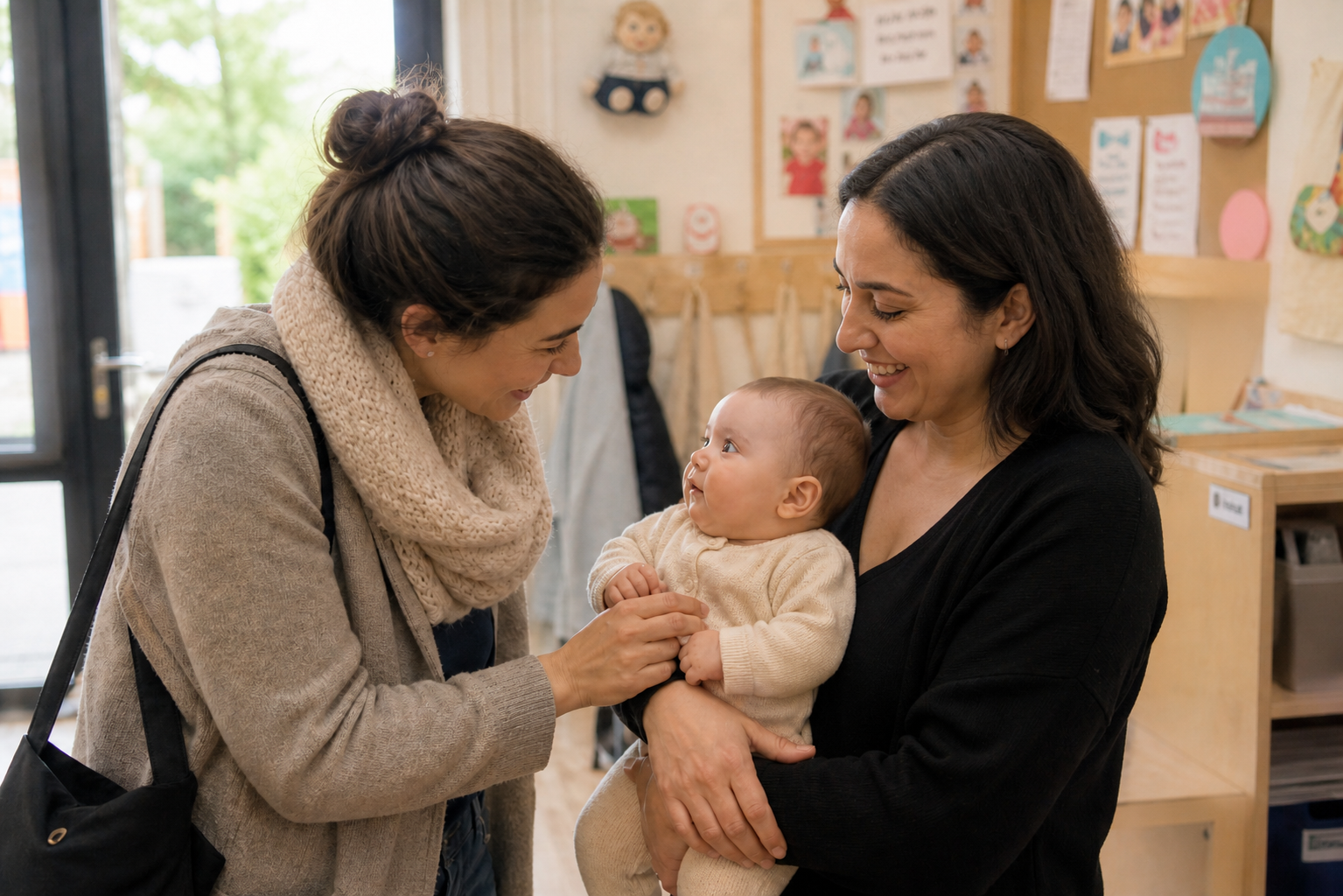
Across our three nurseries, this period begins with short visits that gradually lengthen over the days. A first visit with parents present, a chance to meet the Les Petits Tournesols team, a brief separation, then increasingly longer stays — each step is thoughtfully designed around what the young child is ready for.
This gradual build allows the child to get used to the space, their key workers, the sounds of the day, the daily rituals and the other children, without feeling overwhelmed. It also gives our professionals the opportunity to better understand each child's individual needs and emotional bonds.
Quick summary
- The settling-in period looks different for every child
- It unfolds gradually and with care
- The first separations are generally brief
- Each child's experience is the best guide
- Open communication with the Les Petits Tournesols team is essential throughout
3. What is normal during this period
It is completely natural for a toddler to cry at the moment of separation, seek more physical comfort, cling to their comfort object or seem more emotional than usual. These reactions do not mean that something is going wrong.
Separation anxiety is a normal stage in young children's development. At Les Petits Tournesols, we regularly remind families that it may take time and repetition before a child feels truly at home in their new setting.
4. What parents can do to help
Simple gestures are often the most effective. Talking about nursery in age-appropriate language, keeping a clear and consistent goodbye routine, avoiding drawn-out farewells and leaving a familiar object if needed are all small things that make a genuine difference day to day.
At home, short separations before nursery begins can also help the child ease into the concept. Our teams at Les Petits Tournesols are always on hand to advise families on these everyday gestures that can make the transition so much smoother.
5. The role of the team during settling-in
A smooth settling-in does not rest on the child or parents alone. It also depends, above all, on the quality of the welcome provided by the professionals. At Les Petits Tournesols, our early years teams observe, reassure, adjust their approach and keep families informed of what they experience each day with their child.
In our nurseries in Kayl, Itzig and Brouch, these first days are seen as foundational. The managers and directors of Les Petits Tournesols understand that a well-supported start builds a solid and lasting relationship between the child, their family and the professionals who care for them.
Useful questions to ask
- How does the settling-in period work in practice at Les Petits Tournesols?
- How much time is generally recommended at the start?
- How does the team keep parents informed during this phase?
- What should I do if my child cries a lot at separation?
- Can my child bring a comfort object such as a soft toy or dummy?
6. When to be patient… and when to speak up
In most cases, early emotional reactions ease naturally as the child grows familiar with the setting, recognises the faces around them and finds comfort in the structure of the day. Patience is often the greatest asset during this time.
That said, if a concern persists, if separations remain very difficult over time or if something seems out of the ordinary in the child's behaviour, it is important to raise it openly with the Les Petits Tournesols team. An honest conversation usually helps to shed light on the situation and adapt the support accordingly.
7. The right goal is not speed, but trust
When preparing a child's entry into nursery, it can be tempting to ask how many days it will take for things to "settle down". In early years practice, however, the best measure is not how quickly it happens but how well the child genuinely establishes themselves in their new environment.
With 16 years of experience in early childhood, Les Petits Tournesols has supported hundreds of families through this milestone. We know that a successful settling-in is above all one carried out with respect, flexibility and close attention to everyone involved.
Things to avoid
- Comparing your child to others in the nursery
- Assuming that a child who cries is necessarily struggling to settle
- Trying to rush the process just to "get it done"
- Changing the goodbye routine every day
- Keeping your worries to yourself rather than talking to the Les Petits Tournesols team
In conclusion
Settling into nursery follows no single model or fixed duration. It depends on each child, their individuality and the way this milestone is supported by all the adults around them. At Les Petits Tournesols, what matters most is creating an entry into group life that is gentle, consistent and respectful of every child and family.
Across our three nurseries, our teams, managers and directors remain available to answer families' questions and walk alongside them through this important stage with clarity, warmth and care.
For any question, you can contact us.
Frequently asked questions
How long does nursery settling-in take?
There is no universal duration. Some children feel comfortable after a few days, while others need two to three weeks. It depends on the child, their age, temperament and the quality of the bond with the team.
How does settling-in work at Les Petits Tournesols?
Settling-in begins with short visits with a parent present. The child explores the spaces and meets the team while feeling secure, then parental absences are gradually extended according to the child's rhythm.
Is it normal for my child to cry at separation?
Yes. Crying at separation is a normal, healthy reaction. It does not mean settling-in has failed. Most children calm down quickly after their parents leave.
What should I do if my child still cries a lot after two weeks?
Speak with the nursery team. Adjustments are possible, such as extending parental presence, temporarily adapting the schedule or identifying the routines that reassure your child.
Can my child bring a comforter or favourite object?
Yes. Familiar objects support a child's emotional security during separation. It is best to discuss this with the team from the start of the settling-in period.
Can parents call for news during the day?
Yes. The teams use the Kidola app to share important information. A phone call remains possible; the team will guide you on the most suitable times.
Is settling-in different depending on the child's age?
Yes. A very young baby does not experience separation in the same way as an older child. The teams adapt their support to each child's age, group and temperament.